
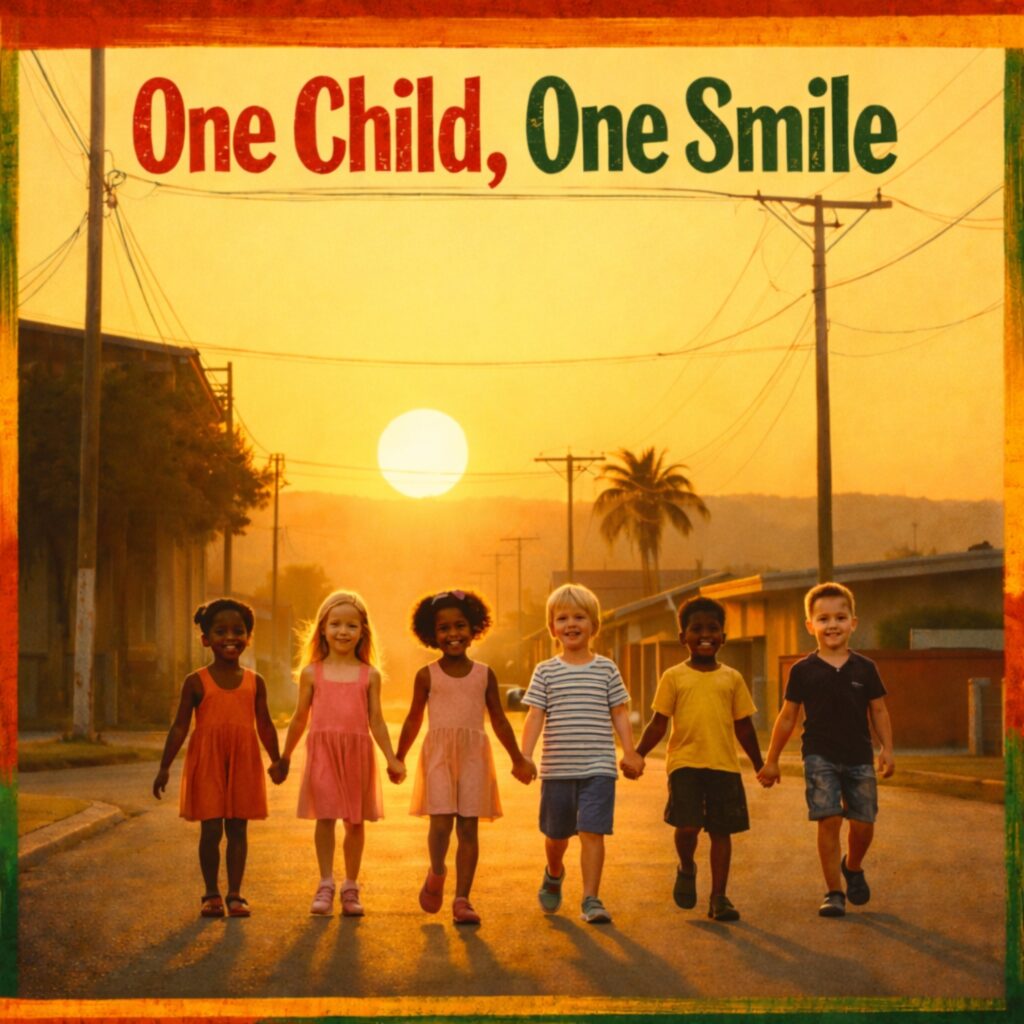
A gentle rhythmic pulse introduces “One Child One Smile,” immediately setting a tone that feels warm and intentional rather than attention-seeking. The instrumentation draws from world and Afrobeat influences, with soft percussive patterns and light melodic layers creating a steady, flowing groove. Subtle pop elements shape the structure, giving the track accessibility while still allowing its global textures to stand out. Each instrument is placed with care, contributing to a sound that feels cohesive and unforced.
The composition unfolds with patience, avoiding dramatic shifts in favor of a consistent, uplifting progression. Verses move with a calm sense of purpose, gradually leading into a chorus that feels open and inviting. The arrangement does not rely on intensity to make its point. Instead, it builds through repetition and clarity, allowing the central idea to settle naturally. This approach gives the track a sense of continuity that aligns with its message.
Production supports that restraint. The mix remains balanced and warm, ensuring that no element overwhelms the others. Vocals sit clearly at the center, supported by instrumentation that enhances rather than competes. The overall sound feels polished without losing its human quality, preserving the sincerity behind the performance.
In a live setting, the song would likely create a unifying atmosphere. Its steady rhythm and clear melodic structure provide space for audience connection, making it easy for listeners to engage with both the music and its message.
Lyrically, “One Child One Smile” centers on compassion, particularly toward children affected by hardship. The writing avoids heavy imagery, choosing instead to express its message through simplicity. It focuses on the idea that even a single act of kindness can create change, reinforcing the belief that empathy still matters.
That emotional core is what gives the song its weight. Rather than overwhelming the listener, it invites reflection, presenting hope as something quiet but persistent.